

Sports Facility Management: How to Run a Profitable Facility
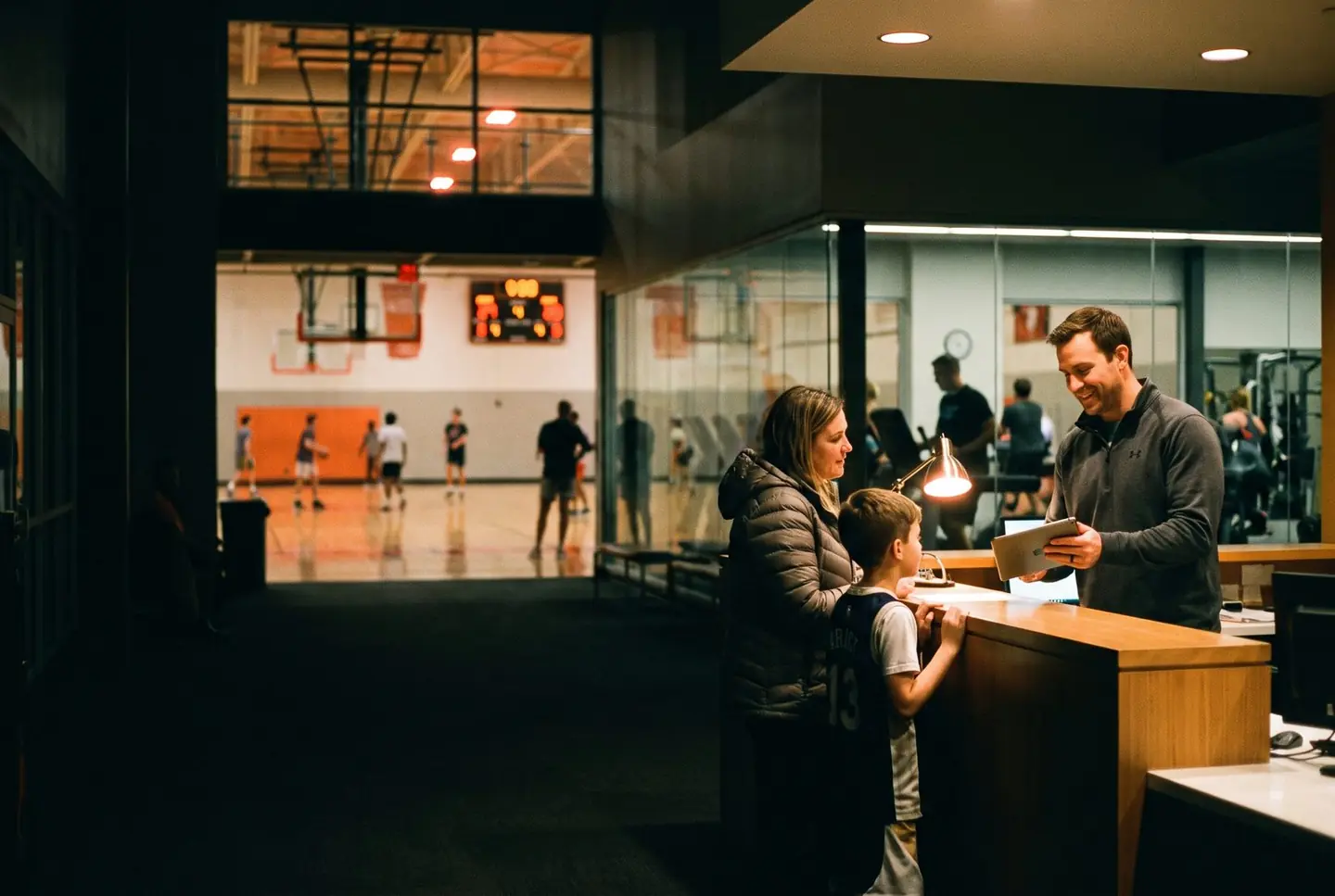
Sports facility management is the work of turning courts, fields, rinks and turf into a business that pays for itself. It covers what members and renters see, like bookings, programs and check-in, and everything behind it: pricing, staffing, payments, insurance and maintenance. Well-run facilities don't have better buildings. They have fewer empty hours, fewer unpaid balances and fewer surprises.
This guide walks through how to run a sports facility day to day, where the money actually comes from, and the numbers worth watching every week.
What is sports facility management?
Sports facility management means planning, operating and growing a venue built for sport: indoor multi-sport centers, turf and field complexes, ice rinks, pickleball and tennis clubs, gyms with court space, and performance and training centers.
People use the phrase in two ways:
- Operations. Running the building yourself: schedules, rentals, programs, staff, customers and money. This guide is about that.
- Third-party management. Hiring an outside company to run the facility on the owner's behalf, common with city-owned or very large complexes.
Either way, the job comes down to the same four things: keep the space booked, keep programs full, get paid on time, and keep everyone safe.
Do sports facilities make money?
They can, but not by default. A facility has high fixed costs, like rent or a mortgage, utilities, insurance and staff, that you pay whether a court is full or empty. Profit comes from how much of your available time you sell, and at what price.
Most profitable facilities share three habits:
- They fill off-peak hours on purpose, instead of living on weeknight and weekend prime time.
- They earn from several streams at once: rentals, leagues, programs, memberships and events. They don't depend on one.
- They know their numbers weekly, not at tax time.
The rest of this guide is how to build those habits.
Where a sports facility's revenue comes from
Think of your facility as a set of hours you can sell in different ways. The more ways you can sell the same hour, the harder it is for that hour to go empty.
- Court and field rentals. Teams, clubs, private groups and individuals book space by the hour. This is the foundation for most facilities.
- Leagues. Adult and youth leagues fill whole evenings for an entire season, with registration revenue collected up front. Tools like league management software handle divisions, schedules, standings and playoffs so a league doesn't eat your staff's week.
- Tryouts and teams. Hosting club tryouts and in-house teams keeps families coming back all year. See how tryouts and team management fit into the same system.
- Memberships. Recurring plans turn one-time visitors into predictable monthly revenue and smooth out slow seasons.
- Camps, clinics and private lessons. These fill daytime and school-break hours when rentals are quiet.
- Events and tournaments. Weekend events bring big one-day revenue and introduce your facility to new families.
- Retail and concessions. Gear, apparel, snacks and drinks add margin on top of every visit, especially when you can sell at the front desk and online.
How to run a sports facility: the core systems
1. Bookings and scheduling
Your schedule is your inventory. If it lives in a spreadsheet, a paper calendar and three people's inboxes, you will double-book, under-book and lose track of who owes what.
Good sports facility booking software should let you:
- show real-time availability for every court, field and space;
- let customers request or book online instead of calling;
- handle recurring rentals (every Tuesday at 7 pm for the season) without re-entering them;
- block time for leagues, programs, maintenance and events in the same calendar.
Searches like "facility rental software" and "sports facility scheduling software" are growing for a reason: managers are tired of piecing this together by hand.
2. Pricing your space
There's no single right price, but there is a right structure:
- Prime and off-peak rates. Charge more for weeknights and weekends, and discount weekday daytime so it actually sells.
- Rental vs. program pricing. A team renting a court for an hour should pay a different rate than a family registering for a ten-week clinic that uses the same court.
- Recurring discounts. Reward groups that book a full season. Predictable revenue is worth a small discount.
- Member pricing. Give members a clear, visible benefit (lower rental rates, early registration or included open-play time) so the membership sells itself.
Review pricing every season against how full each time block really was.
3. Programs, leagues and memberships
Programs are what turn a building into a community. They also protect you: when a rental group leaves, a full league or clinic still fills the space.
Start with what your community already asks for, run it well, then expand. Put registration, waivers and payment into a single flow so families sign up in one sitting, and offer membership plans with perks people understand at a glance.
4. Payments and collections
Unpaid balances are one of the quietest ways facilities lose money. Every "I'll pay at the next game" that never happens comes straight off your margin.
Set things up so you rarely have to chase anyone:
- take payment when someone books or registers, not afterward;
- accept cards online, at the front desk and on the go with tap to pay;
- send payment links for dues, rentals and balances;
- let reminders for unpaid balances go out automatically;
- decide whether you absorb processing fees or pass them on, then state one clear all-in price.
For more on getting paid, see our payments guides.
5. Waivers, insurance and safety
Most facilities carry general liability insurance, and insurers typically require signed waivers from every participant. The hard part is rarely writing the waiver. It's collecting it from every player, every season, before they step on the court.
Collect waivers digitally during registration or booking, use QR codes at check-in for walk-ins, keep a record of which version each person signed, and be able to see instantly who hasn't signed. Signature handles this whether or not you use the rest of Natty Hatty. Our waiver guides go deeper.
Pair that with a simple safety routine: posted rules, a first-aid kit and AED, incident reports, and regular equipment and surface checks.
6. Staffing and the front desk
Your front desk is where customers form their opinion of your facility. Keep it simple for staff:
- one system to check people in, take payments and answer "when is my game?";
- clear roles, so the same person isn't running check-in, concessions and a league schedule at once;
- short, written procedures for opening, closing and handling problems.
The less time staff spend searching for information, the more time they spend with customers.
7. Maintenance and facility care
Surfaces, lighting, HVAC, nets and goals wear out on a schedule, whether you plan for it or not. Block maintenance time in the same calendar as bookings so it never collides with a rental, and keep a running list of repairs with dates and costs.
The numbers to track every week
You can't improve what you don't measure. Five numbers tell you most of what you need to know:
- Utilization rate: the share of available hours actually booked, split into prime and off-peak.
- Revenue per available hour: total revenue divided by the hours you could have sold.
- Program fill rate: registrations compared to capacity for each league, clinic and camp.
- Member retention: how many members renew each month or season.
- Outstanding balances: how much is owed to you and for how long.
When your bookings, registrations, memberships and payments live in one system, these come straight from a dashboard instead of an afternoon of spreadsheets. If you run more than one location, look at them per location and combined.
Common sports facility management mistakes
- Running on prime time only. If weekday daytime sits empty, you're paying for space you never sell.
- Too many disconnected tools. A booking app, a separate payment tool, paper waivers and a spreadsheet for leagues means double entry and lost money between the gaps.
- Collecting payment after the fact. Every "pay later" is a balance you may never see.
- Paper waivers. They get lost, go unsigned and fail you exactly when you need them.
- Pricing that never changes. Demand shifts by season; your rates should too.
Bringing it together
Profitable facilities fill more of their hours, earn from several streams, get paid up front and watch their numbers every week. The easiest way to do all of that is to stop stitching tools together and run bookings, programs, memberships, waivers and payments from one connected system.
Natty Hatty is sports facility management software built for exactly that, and it starts at $35 per month per facility. Talk to our team to see how it fits your facility.
Frequently asked questions
What is sports facility management?
It's the planning and day-to-day operation of a venue built for sport: bookings, pricing, programs, memberships, staffing, payments, insurance and maintenance. The goal is to keep the space full, customers happy and the business profitable.
Do sports facilities make money?
They can. Profit depends mostly on how many of your available hours you sell and at what price, since costs like rent, utilities, insurance and staff stay the same whether courts are full or empty. Facilities that fill off-peak time and earn from several streams (rentals, leagues, programs, memberships and events) are the most resilient.
How do you run a sports facility successfully?
Keep one accurate schedule for every space, price prime and off-peak time differently, build programs and memberships that fill slow hours, take payment up front, collect waivers digitally, and review your utilization and revenue numbers every week.
What software does a sports facility need?
At minimum: booking and scheduling, online registration, payments, and digital waivers. It works best when these are one connected system, so customer, schedule and payment information never has to be re-entered.
How should a sports facility price court or field rentals?
Use a prime rate for weeknights and weekends, a lower off-peak rate for weekday daytime, discounts for groups that book a full season, and a visible discount for members. Revisit rates each season based on how full each time block was.
Do sports facilities need waivers?
Most insurers require signed waivers from participants as part of liability coverage. The challenge is collecting them reliably, which is why many facilities collect waivers digitally at registration or with a QR code at check-in.